
Of all the currency types that are available to you, which one takes years to earn, seconds to lose, and forever to regain?
If you said trust, you are right.
Trust is one of the more sought after, yet easily fleeting types of currency.
Especially in the world of fundraising. Even more so with AI’s unreal reality.
The trust between a donor and the nonprofit is foundational.
Do you agree?
Take Ellen for example. She clearly impressed this point upon me. She’s a key donor who lived in a small town just outside of Ocala, Florida.
With no uncertainty in the tone of her voice, she asked the following three questions on my initial contact with her.
- “Can I trust your nonprofit with more contributions?
- “Are my gifts going where you say they’re going?
- “How will I know?
If you haven’t been to the Ocala area, it’s a tranquil and picturesque and part of Central Florida.
“Horse country,” Ellen said.
“When you come out, you can go for a ride. But if you stop to water you horse, remember the Florida rule: if there’s water, there’s probably an alligator in it.”
Ellen quickly had my trust on this point. No issue and no proof of caution required.
Alligators & Water. That’s a trustable duo.
Ever had a donor ask you those questions? Or questions similar to?
Though Ellen had my complete trust about the alligators, my hope was that she, in turn, had trust in what I was showing her.
It was my privilege to give tangible assurance that her contributions were, in fact, going where she wanted.
That’s why we as development people do better when we add “visible confirmation” along with “personal care” to our donor cultivations.
Care & Confirmation. Trust & Transparency.
Both are foundational duos. Like Abbott & Costello, Mantle & Maris, Lennon & McCartney, or even Park Place & Boardway to name a few from the OG school of trusted tandems.
Perhaps you can name a few as well?
As you think about other trusted-twosomes, think about how donor-trust is an essential. It’s a strategic and substantial asset shared between your donors and your nonprofit.
This Currency of Trust—as South African tech master and choral-guitar teacher Charl Coetzee calls it—reduces risk.
It increases collaboration between a nonprofit organization, ministry, hospital, health care, cause, movement, foundation, museum, research center, and many other NPO’s with their donors.
Without equal, trust stands as the foundational stone that solidifies lasting interactions and reliable reputations.
No doubt some will say they don’t believe it. To them I say . . .
Trust me, because I’ve seen it, experienced it, and witnessed it over the past 35 years.
It’s the friction-fighter on the wheel of donor development, longevity, and satisfaction.
It serves as the primary conduit that enables relationships to start, grow, and mature.
Without question, trust is the pathway that bridges personal connections and develops economic advantages. Those that flourish and survive over time.
Way longer than the typical 3.5 years of expected donor-life.
In building trust, seeing is believing.
No, you don’t have to take your donors to Africa, Ukraine, the Mississippi Delta, a terminal health ward, or along the backstreets of a major city at night to do this.
But, if they will go, yes, take them for sure.
There is no replacement for a hands-on and boots-on-the ground confirmation of the good that is being done through your donor’s love and care for those who suffer.
However, most donors won’t go for a variety of reason. So, in place of such a physical trip there are many good and believable replacements.
These include, among others, such things as your frequent and well-timed appeal letters plus your print newsletters and magazines if you have such.
For the past thirty-plus years, we have seen fact-based, compassion-showing, and need-awareness publications build trust.
The multiple billions of dollars we have raised for nonprofits would not have been possible without these marketing communication instruments.
Electronic and tech-based communications are growing, no doubt. But the bulk of individual funding can still originate in OG direct mail.
A clear example of this was seen when during one six-month period we raised right at $15 million online for a major international nonprofit.
At the same time, with their same donor file, we raised $80 million through direct mail. That’s a total of just under $100 million. And no major gifts were in that mix either.
All based on building confidence through carefully created and strategically implemented reinforcement of trust-building materials and visualized representations.
Oh, before we go any further, how are you doing on your list of adding a few more trust-based duos?
How about: Brooks & Dunn, Wayne & Garth, Thema & Louise, or maybe Bonnie & Clyde?
Trust may not, in and of itself, make the fundraising world go around. But it sure stops it from not turning.
All consumer behavior is at some level built on trust. For philanthropy or general business, it is the same core essential.
Famed psychologists Esther Perel and John Gottman assert that trust is the “active engagement with the unknown.”
They add that “It requires consistent emotional vulnerability, reliability, and honesty to maintain healthy relationships.”
Sounds like a reliable plan for building a solid relationship with one’s donors.
Long-standing funding programs that raise millions, even billions, for their mission statements, employ trust-building measures in all their communications.
Communications that demonstrate where a donor’s contributions are going. And validate that the gifts went where they were said to be going.
Most of all, trust-building visualizations illustrate how lives are being changed and bettered in the process.
For donors to nonprofits of all types, there are three pillars of trust that are essential for a confident relationship.
The first pillar is capacity. Can the organization actually do what it says it will do with the donor’s gift?
Next is consistency. Are the repeated descriptions and accounts honest and full of transparency?
And lastly, compassion. Is there actual care and consideration extended to those in need?
In the undergraduate classes I have taught over the past 15 semesters at the University of Texas at Dallas, my bright marketing students have been schooled on the various varieties of currency.
The forms that are in addition to legal tender.
Trust is no doubt high on that list. Other currencies included are valued items like relationships, influence, connections, access, prominence, positioning, proximity, and integrity, among many more.
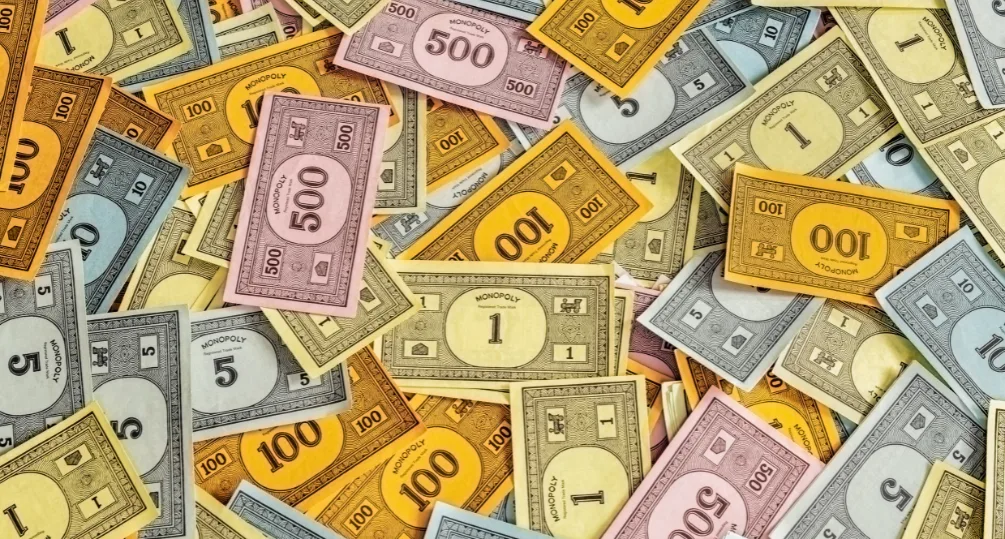
However, currencies such as Monopoly Money, as viewed above, are excluded. You have to be real to be real.
Commercial companies build trust through expressed forms of accessible reliability.
Such things as warranties, money-back guarantees, free returns, demonstrations, and celebrity endorsements to name a few.
We fundraisers reduce risk for our donors mostly through our communication packages supported by delivery cycles with a consistent cadence.
The more we display, demonstrate, and describe, the better the trust message is received.
The stronger we express how the donor makes a positive change and a lasting impact on the need at hand, the more that risk is reduced, and trust is expanded.
Both of which are solidified by consistent streams of communication.
Not once a year. Not once a quarter. And for heaven’s sake, not only when you need funds.
The one sure death knell to donor support is hearing them say, “The only time I hear from you is when you need money.”
No one wants to be unappreciated. No one wants to be a commodity ATM machine.
Not you. Not me. And not the man—or woman—in the moon. No one.
And no one wants to feel stupid. Feeling stupid impacts our highly protected shame core. Everybody—apart from true psychopaths—protects their shame core to just this side of complete demise.
Trust me on this one too.
In this new age of AI where almost anything can look real, the valued appreciation of trust exceeds that of Bitcoin in a bull run. And not the one in Pamplona, Spain, either.
Speaking of AI, have you seen and heard the new music released under the name of Eddie Dalton? Amazingly amazing. A huge part of me doesn’t want to believe it is not original.
Ella Fitzgerald would roll over in her proverbial grave along with her Memorex tapes if she saw and heard this musical creation.
The convergency of new (NG) tech-based fundraising meeting up with the tried-and-true OG workhorses of direct mail and personal visits are upon us.
How, when, where—and with what consistency and transparency—that we provide donors with the Currency of Trust, will determine how they trust us with their currency to make the world a better place for all of us.
So, in closing, how did your “dependable duo” list come out? Did you add the current-day, NG duos of Lilo & Stitch, Timon & Pumbaa, Calvin & Hobbes, or Woody and Buzz?
If you have more trustable teams to add, drop me a note so yours can be added to the next conjoining of trust and currency.
Just please avoid suggesting Jekyll & Hyde.
For though he may have been “a pillar of society and model of propriety,” you just can’t trust which one of his duos would show up. Or when and where, like in a dark alley or some other sinister location.
Which is an appropriate ending note about what type of fundraising and nonprofit professional we choose to be.
My trust is it will be the one who cares for your donors while also building a long-term relationship based on their knowing, liking, and trusting you.
The Currency of Trust. Spend it wisely as you build untouchable trust and transparency among those within your care.
And remember all roads lead to the same castle, just not all journeys are the same.
So, travel well,
E. Paul