

What does a weather report have to do with your success? Or your demise, as a founder, CEO, or senior officer of your company, organization, or nonprofit?
Just ask James. James Stagg: to coin a popular 007 expression.
But not James, the British secrete agent. Rather James, the British meteorologist.
He is the one who changed D-Day the 6th of June from being D-Day the 5th of June.
Here’s why this actually matters to you and how it applies to your making critical decisions about your operation.
To make this more simple, here is a quick rundown of the backstory.
The original date for the invasion of Normandy was June 5, 1944. Who knew? Not me until I saw a very good portrayal of that change in the recent drama entitled, “Pressure” (on Peacock).
General Dwight David Eisenhower, who was born just about an hour north of me here in North Texas, was all set to send some 133,000 seaborn troops onto five beaches in northern France to dislodge the German Nazi forces.
Plus, he was to fly in another 23,000 or so airborne troops. All arriving via 7,000 Allied naval vessels and more than 11,000 aircraft.
The last detail? Would it be sunny skies or sea swells?
As you can imagine, you can’t keep landing craft afloat in high seas and you can’t drop paratroopers into low, stormy clouds.
Here’s the dilemma and the connection to you.
The go-day, or D Day, was dependent upon the weather. Better still, the “prediction of the weather” since you can’t change the weather, but you can change the prediction.
Internally in the war room, there was great disagreement about the forecast. One side led by American meteorologist Irvin Krick, predicted smooth sailing and sunny skies.
On the other side of the aisle, British meteorologist James Stagg strongly projected severe storms with a high death count if the troops attempted their invasion on June 5.
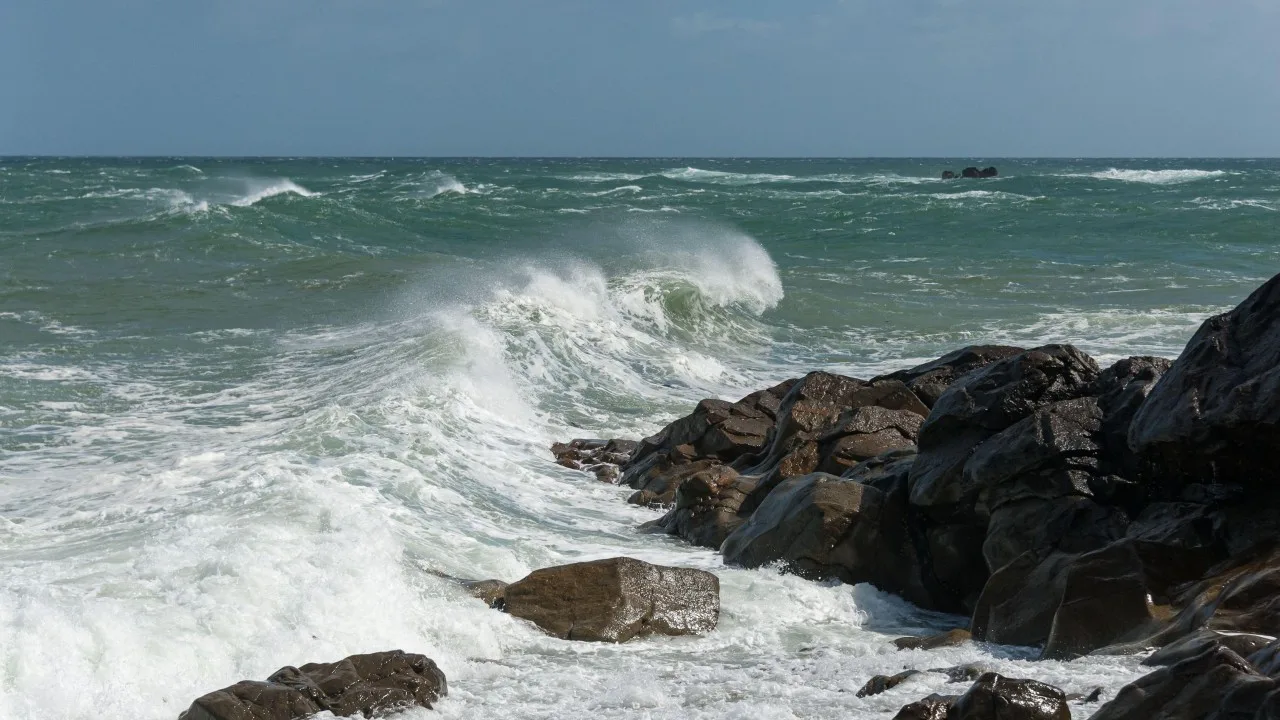
As it turned out, Stagg was right about the weather: high seas, gale-force winds, and low clouds prevailed as a rapidly approaching storm hit the English Channel.
This is an example of where most people get decision-making wrong. They rely on non-connected context to convince themselves that they are correct.
And this is why having an array of trusted advisors around you is so important when making decision about an unknown future event.
And especially important, having both internal and external truth-tellers at your side. Internal truth tellers are important because they better-know the ins and outs of the operation. External counsel because they have less internal-cultural to protect and can speak both more freely and openly with less downside to be concerned about.
Even more so when a bastion of built-in biases is protecting all.
Such was the case for General Eisenhower when Krick used pre-existing analog charts based on historical data. And data about another part of the world that was more predictable than the forever changing North Atlantic Ocean.
Krick was entrapped by a trio of his own biases called “anchoring or status quo bias,” “availability heuristic,” and “frequency bias.”
All three biases are, and were especially then, deadly to good, logical reasoning.
James Stagg was more of the “external” expert who was not locked in by preconditioned culture. Instead, he relied on current context over historical convention.
He used current context to cancel concealed inconsistency.
Here is what you can do to insulate yourself against these deceptions, which is what Eisenhower did. The General surrounded himself with a mix of internal and external advice, counsel, and truth.
You can help yourself by embracing the tendency we all have to, as Seth Goden says, “navigate the world with our own stories, beliefs, and assumptions.”
When we are invested in proving that we have the right answer instead of providing the right answer, we are a risk to all.
In closing, Ike Eisenhower has two more great quotes, and I thank him day in and day out for this first one.
I say that because I use it almost every day in my university classroom where I teach marketing along with providing strategic counsel to mid-sized, growing companies, organizations, and nonprofits.
Eisenhower, as an Army General said, or repeated, that “The plan is worthless. Planning is essential.”
Planning that surrounds yourself with readily available truth tellers and wise, experienced, less-biased counsel. We are all biased, well maybe except for you.
This is an essential part of the plan as you prepare what you will, won’t, could, and might or might not do.
The other quote from Eisenhower is when, as the 34th president of the United States, he was riding with newly elected President Kennedy to the inauguration ceremonies.
Kennedy asked what gave the Allies of World War II the advantage for the Normandy invasion.
President Eisenhower replied, “Because we had better meteorologist than the Germans.” Weathermen who found a small window of opportunity when all seemed dark and stormy after seeming to be so bright and sunny.
When you travel the unknown roads of the future, and it is hard to tell if sunshine will turn to storms or if storms will break long enough for a strategic move, it is good to have a trusted counselor who can advise you about the context and connected circumstances of your committed journey.
And with such, you will have a clear sense about a better forecast indicating that all roads still lead to the same castle.
Until the next issue of “Castle Roads,” travel well.
E. Paul