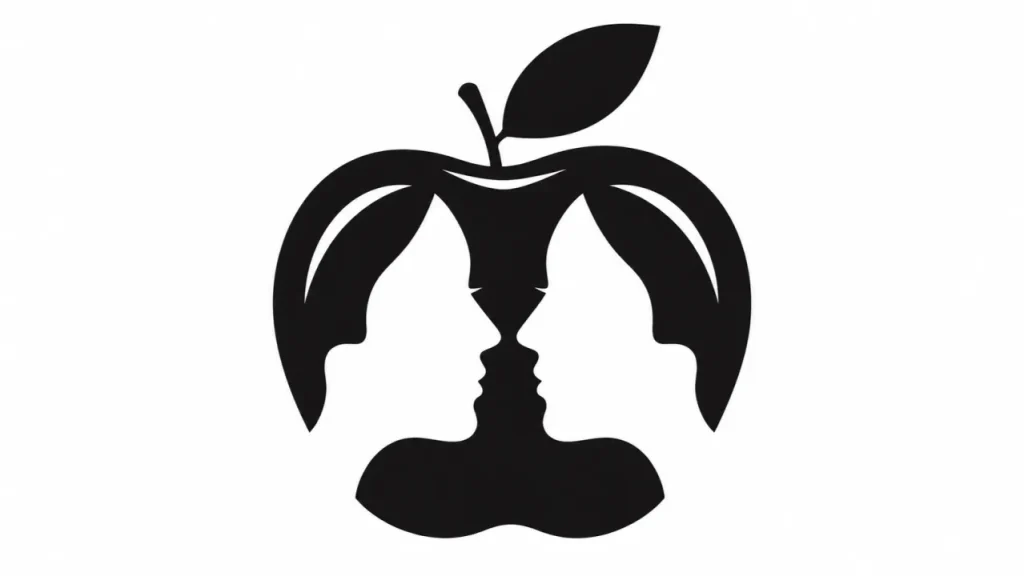


It was early on the first day of our initial strategy meeting.
Pamela, the executive director, was sitting across her modest conference table from me when she said something I didn’t expect.
Maybe you have heard this before too. Or even said this to yourself as the founder, CEO, or head of a charitable organization.
It was a heartfelt expression, no doubt. And yet, maybe it was more of a searching question in disguise, rather than a statement of unease.
So what was decidedly unusual about what Pamela said?
As the official voice of this nonprofit, she laid our proposed fundraising copy down on her notepad. Then, with a reflective sincerity, she said . . .
“This doesn’t sound like me.”
A fair feeling, no issue with her sentiment. But, maybe, there was a greater question behind her thoughtful statement.
And that is: Should it?
Should it sound like what she was thinking in her head?
I have a very simple answer to this question. And that is, “Yes,” and “No.”
Be assured I am not talking here about being deceitful, deceptive, or disingenuous.
Nor am I suggesting anyone be unethical, immoral, or illegal.
No, not at all, not in any way.
Because with AI and its capricious reliance in fundraising copywriting—as well as other forms for that matter—honesty, integrity, and transparency are now more respected and needed than ever before.
“AI slop” as ASK-originator Ryan Levesque calls it. Ever had someone on the other end of an email conversation disrespectfully respond to you through AI and not in person?
But back to my response to this insightful nonprofit executive. We are talking exclusively about being truthful, transparent, and transformative.
My response to a comment like Pamela’s is always the same. “Yes, speak out of your heart. But also speak into your donor’s heart so they can hear and feel what you are saying.”
Be true to you, and be true to your donors as well.
This is where many founders, CEOs, and senior executives miss a critical step in connecting with their constituency.
They speak from their own heads, instead of speaking to the hearts of their donors.
If you recall one thing from this issue of Castle Roads, remember this:
Donors don’t care how much you think they should care about you. Donors care how much they think you should care about them.
Let’s break this down further.
Seth Godon says in his book entitled, This Is Marketing: You Can’t Be Seen Until You Learn to See, that “Each person has a story in his or her head, a narrative used to navigate the world.”
This means your donors see the world through their own stories, beliefs, and assumptions.
These are their points of reference, as psychologist Aaron T. Beck points out through his honored “Cognitive Triangle.”
This foundational concept of Cognitive Behavioral Therapy (CBT) references how our “thoughts” lead to our “emotions” that lead to our “actions.”
What this means to you as the head of a nonprofit is that you are operating and speaking into your donors’ existing stories, beliefs, and assumptions.
That’s why your funding and outreach initiatives are best served when you embrace that it doesn’t only matter if you are convinced. It matters equally so, if not more so, that your donors are convinced.
Let me give you an example.
One struggling NGO on the east coast that I started consulting with insisted at first that their fundraising copy promote their events and conferences.
They wanted to tell all about how many field workers came from all over the world and what a meaningful program they held in a renowned international setting. A pricey place, even.
In over 30 years of advising nonprofits about how to raise substantial amounts of operational funds through direct mail, digital, major gifts, and planned giving, I’ve never experienced a donor asking to give a gift about a conference.
But I’ve had many donors give large amounts to help people in need who were discussed at the conference.
How simple it seems to write and speak about the “good from” rather than the “good to” in these conferences and meetings.
Logical perhaps, but therein lies the rub.
We are best reminded to avoid leading with logic. I say this to you, and to remind myself in the same way that I tell my university students: all decisions are based on emotion and justified by logic.
Or as neuroscience and behavioral psychology more specifically state: “Choices are frequently driven by subconscious emotional states and later rationalized with logic.”
However, I defer to my own more concise definition. After all, I’m the university professor. They are just an AI quote.
Here’s what is not AI and what this means to you and “sounding like you.”
Begin with your donors’ worldview. What do they believe? What stories and logic-supported emotions are resting in their heads and hearts?
Funding works best when our message fits into our donors’ narrative. That is, when we move into the story currently playing in their heads and hearts. The story they are now feeling and hearing.
Our job as conveyors of what our donors want to do is not to show them how “right” we are. It is to show them how the “right” we are doing on their behalf feels good to them.
Whether it be to feed the hungry, house the homeless, clothe the naked, heal the sick, cure the disease, build the care facility, elect the candidate, cultivate the fields, save the forest, or just plain ole make the world a better place for all of us.
So, in closing, let “sounding like you” express how you are heard.
Expressed in a way that allows your donors to feel how it meets their pre-existing desires to help those they care about.
That is to write in a manner that let’s your donors know how to help you to help them do what they already want to do.
Imagine for a minute how much more your “sounding like the way your donors are already feeling and thinking” is better for you and for them.
Plus, better for people in the world who are struggling day in and day out.
My encouragement to Pamela, and to you, is to indeed speak in a way that sounds like you. Yes, for sure.
And to, at the same time, speak and write in a way that allows your donors to see, hear, and feel what you are thinking. To do so in a way that sounds like what they too are seeing, hearing, and feeling.
As you speak and write from your heart to the hearts of your donors, you can be assured that all roads can indeed lead to the same castle.
It’s just that some roads getting there may seem like a different journey in a very similar way.
Until the next issue of Castle Roads, travel well.
E. Paul